

English
Electric & Hybrid Used Cars in Dubai: Are They Worth Buying?
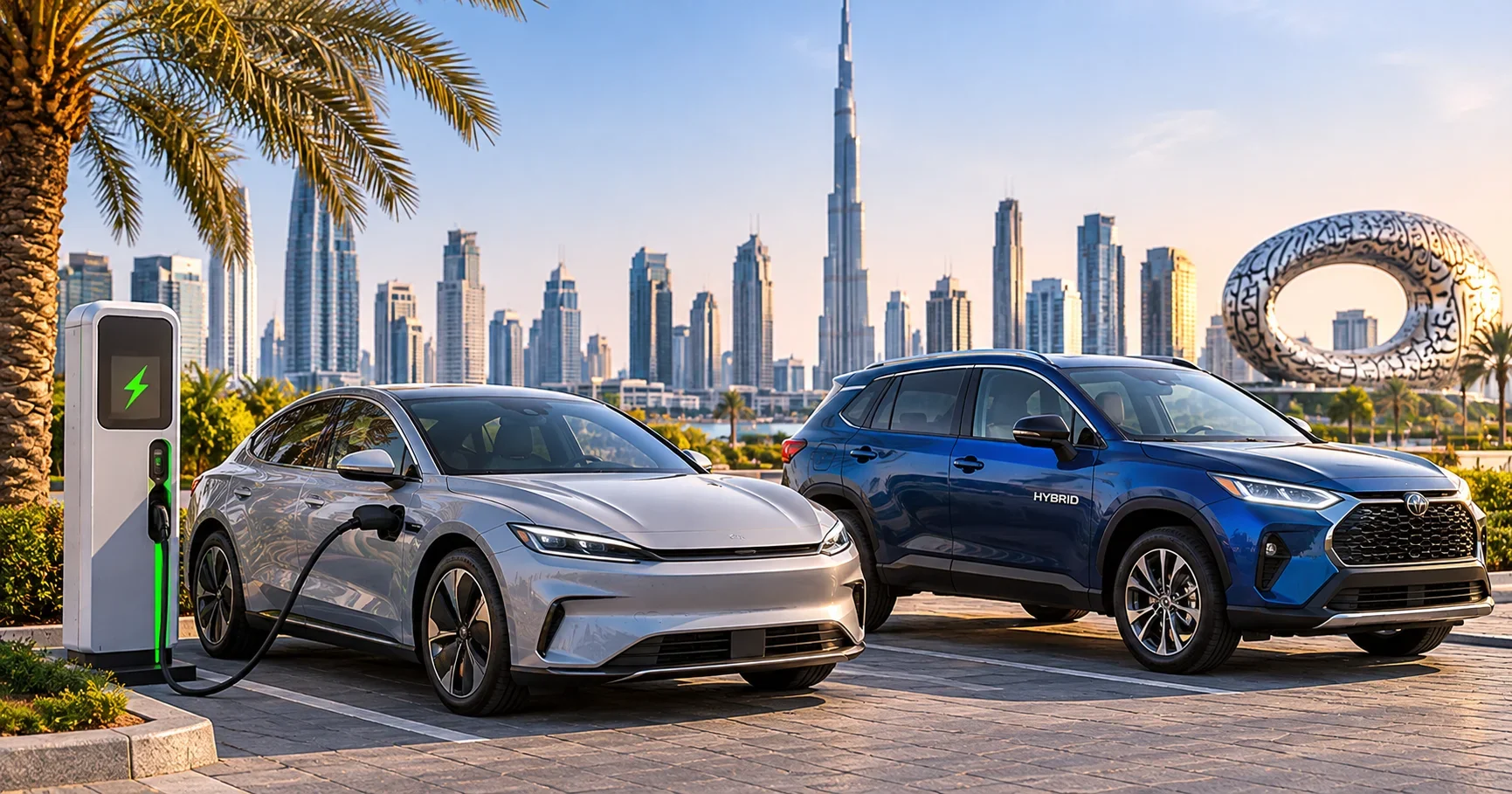
Yes, a used electric or hybrid car can be worth it in Dubai, but the right one depends on where you can charge. A hybrid suits almost anyone: you fill up as normal and simply use less petrol. A fully electric car saves the most if you can charge at home or at work, because relying only on public fast chargers costs about the same per kilometre as running a hybrid. With Special 95 at AED 4.04 a litre in November 2026, our example hybrid spends about AED 120 less on fuel every 1,000 km than a similar petrol car. Battery health is the key check: real-world fleet data shows EV batteries lose about 2.3% of their capacity a year on average, slightly more in hot climates. Buyer interest is climbing, with used EV listings up 41% in 2025. In short, a hybrid is the safe saving, and an EV is the bigger saving if you can charge at home.
Hybrid, plug-in hybrid or fully electric: what's the difference?
Three types of electrified car turn up in the UAE used market, and each asks something different of you.
Hybrid (HEV).
A petrol engine works with a small battery that charges itself as you drive and brake. You never plug in. Popular examples are the Toyota Camry Hybrid, Toyota RAV4 Hybrid and Lexus ES 300h.
Plug-in hybrid (PHEV).
A bigger battery that you charge from a socket covers short trips on electricity alone, and the petrol engine takes over on longer drives. Toyota launched a RAV4 plug-in hybrid in the UAE in November 2026, so expect few on the used market for now.
Electric car (EV).
A battery and electric motor only, charged at home, at work or at public chargers. Tesla, BYD and Zeekr models are the most common used choices.

A hybrid changes nothing about how you live with the car. A plug-in hybrid rewards regular charging, and an EV depends on it. In short, the more easily you can plug in, the further along this scale you can go.
How much can you save on fuel with a used EV or hybrid in Dubai?
UAE fuel prices change every month. For November 2026, Special 95 costs AED 4.04 a litre, down from AED 4.28 in October. Public EV charging has a national minimum price set by a Cabinet decision: AED 0.70 per kWh plus VAT at slower AC chargers, and AED 1.20 per kWh plus VAT at fast DC chargers.
To compare, we priced 1,000 km of driving using typical consumption: 8 litres per 100 km for a petrol sedan, 5 litres for a hybrid and 16 kWh for an EV.

The hybrid saves about AED 120 per 1,000 km over the petrol car. An EV charged at public AC chargers saves about AED 205. Home charging is usually cheaper still, because DEWA bills it at your normal home rate of 23 to 38 fils per kWh for most residents, plus a fuel surcharge and VAT. The surprise is fast charging: an EV that only uses DC fast chargers costs about the same per kilometre as a hybrid.
Over 20,000 km a year, those savings come to about AED 2,400 for the hybrid and AED 4,100 for an EV on AC charging. Summer air conditioning and motorway speeds push every figure up. In short, a hybrid cuts your fuel bill by more than a third, and an EV cuts it by more than half if you charge slowly.
Does the UAE heat wear out EV and hybrid batteries?
Heat ages batteries a little faster, but less than most buyers fear. A January 2026 battery health study by Geotab, a vehicle data company, found that EV batteries lose about 2.3% of their capacity a year on average. Cars in hot climates lost only about 0.4% more a year than cars in mild weather. Charging habits mattered more: cars that relied on high-power DC fast charging lost up to 3% a year, around double the rate of cars charged mostly at lower power.
So a five-year-old EV with typical use could still hold close to 90% of its original range. Hybrids use smaller batteries that work in a narrow charge band, and they come with long warranties. Toyota UAE, for example, covers the hybrid battery for 8 years or 160,000 km, whichever comes first, and says its warranty is fully transferable when the car has been serviced as Toyota recommends.
The practical checks are simple. Ask for a battery health report that shows the state of health as a percentage. Ask how the car was mostly charged. Then check how much battery warranty is left and whether it passes to you. In short, UAE heat is a minor factor, and the battery report and remaining warranty tell you far more.
Which used EVs and hybrids are UAE buyers choosing?
Tesla is the most popular used EV brand in the UAE, with BYD and Zeekr gaining ground, according to marketplace data reported by Khaleej Times. Used EV listings rose 41% in 2025. Typical asking prices reported for popular models were:
| Model | Typical asking price |
|---|---|
| Tesla Model 3 (2021–2025) | about AED 95,000 to AED 164,000 |
| Tesla Model Y | about AED 94,000 to AED 186,000 |
| Tesla Model X | about AED 282,000 to AED 311,000 |
| Porsche Taycan | about AED 332,000 to AED 405,000 |
Other EVs drawing buyers include the BYD Han, the BMW iX and iX3, and the Mercedes-Benz EQE SUV. Interest is rising with fuel prices. In the first week of April 2026, engagement with EV listings jumped 24% and hybrid interest grew about 8%, against 5% for petrol and diesel cars, Technical Review Middle East reported.
Among hybrids, Toyota leads. The Camry, RAV4 and Corolla are all sold in hybrid versions, and a Land Cruiser hybrid joined the UAE range in 2025. You can browse pre-owned Toyota cars to find one.
Resale is where the two differ most. Toyota and Lexus hybrids are familiar to buyers and easy to service, which supports their value. A used EV's price depends heavily on its battery health and remaining warranty, so a car with a strong battery report sells faster. In short, Tesla leads used EVs, Toyota leads hybrids, and battery health sets the price of any used EV.
Where can you charge an EV in Dubai, and what else changes?
Dubai's public network is growing fast. DEWA said in January 2026 that the city had more than 1,860 EV charging points, from ultra-fast chargers to wall boxes, and 23,600 registered EV Green Charger users. Most drivers register for a DEWA EV Green Charger account to use them.
Home charging is the cheapest and most convenient option. In a villa, a wall charger is installed by a DEWA-approved contractor and the electricity is billed through your DEWA account. In an apartment, ask the building management first, because charging in a shared car park needs their approval. If you cannot charge at home or at work, a hybrid will probably suit you better.
Everything else works as it does for any used car. The RTA ownership transfer, registration renewal and Salik tolls follow the same steps. Get an insurance quote before you agree a price, because premiums for EVs vary between insurers. In short, if you have a parking space where you can charge, an EV is easy to live with in Dubai.
So, is a used EV or hybrid worth it for you?
It comes down to how far you drive and where you park.
Whichever you choose, check the car carefully before you pay.

The single most useful step is an independent check. You can book a car inspection with Alsayaarat from AED 299, with prices varying by vehicle type. A certified specialist checks more than 100 points at your location and emails you the report. Ask the seller for a battery health report as well, usually from the brand's authorised dealer. In short, a used hybrid is worth it for most Dubai drivers, and a used EV is worth it when you can charge at home and the battery checks out.
Ready to go electric or hybrid?
Browse used cars across the UAE on Alsayaarat, book a 100+ point inspection, and buy with confidence. Create a free account to save the cars you like, or contact our team for help choosing. Selling a petrol car to make the switch? You can sell your car in 4 easy steps.
Frequently Asked Questions
Is a used electric car worth it in Dubai?
Yes, if you can charge at home or at work, because slow charging costs far less per kilometre than petrol. If you would rely only on fast chargers, a hybrid saves about as much.
How long does an EV battery last in UAE heat?
Real-world data shows EV batteries lose about 2.3% of their capacity a year on average, only slightly faster in hot climates. Frequent DC fast charging wears a battery more than the heat does.
Is a used hybrid better than an EV in the UAE?
For most drivers who cannot charge at home, yes. A hybrid needs no charging, uses less petrol, and is easy to service and resell.
How much does it cost to charge an EV in Dubai?
Public chargers cost at least AED 0.70 per kWh plus VAT at AC chargers, or AED 1.20 per kWh plus VAT at DC fast chargers. Home charging is billed at your DEWA home rate and is usually the cheapest option.
What should I check before buying a used EV or hybrid?
Get a battery health report, confirm how much battery warranty is left and whether it transfers, read the service history, and book a full pre-purchase inspection.
Related Content
Most Popular Used Cars in the UAE Right Now: Top 10 Models and Prices
What Is a Sedan Car? Types, Pros and Cons for UAE Drivers

How to Sell Your Used Car in Dubai Safely: Options, Scams and RTA Steps

What Makes a Used Car Dealership Reliable and Safe to Use?
How to Sell Cars in the UAE: Step-by-Step Guide for Fast Results